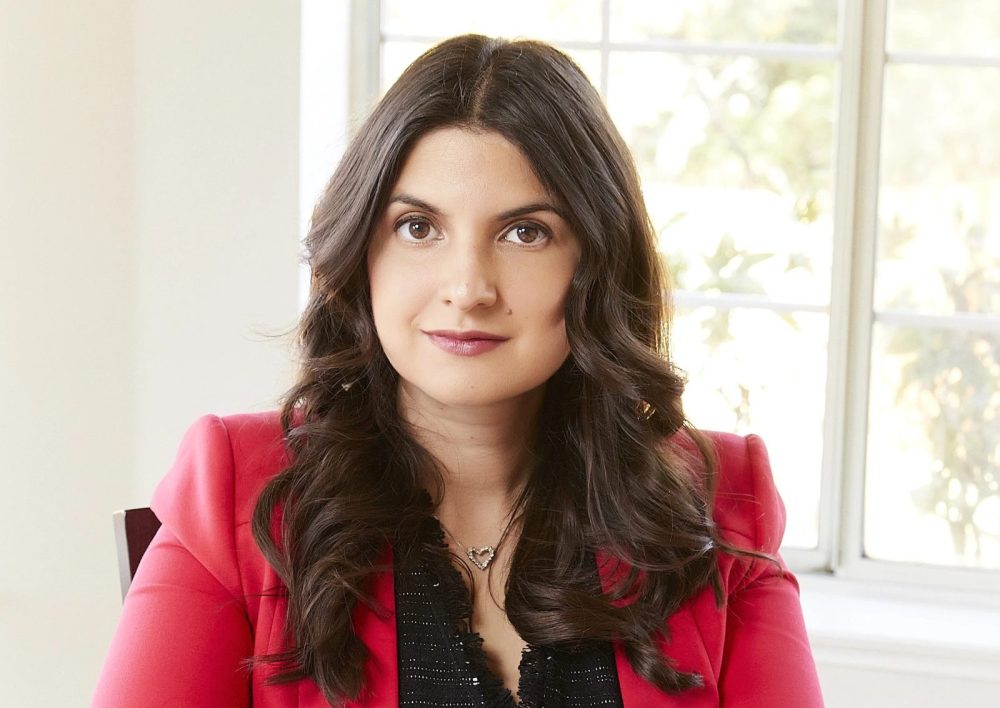
Roxana Daneshjou, assistant professor of biomedical data science, has been named a Fierce 50 Innovation Honoree. Fierce 50 recognizes people and organizations who advance health, science and patient care. A board-certified dermatologist and physician-scientist, Daneshjou develops and evaluates artificial intelligence systems in biomedicine and healthcare.
Now in its fourth year, Fierce 50 honors leaders in healthcare whose contributions close the gap “between what medicine can do and what it delivers,” writes Ayla Ellison, editor-in-chief of Fierce Life Sciences and Healthcare. She adds that these leaders “refuse to call anything progress while whole populations sit outside its reach.”
In her research, Daneshjou takes a rigorous approach to evaluating AI in healthcare for safety, fairness and transparency. She has exposed bias in healthcare AI and has led efforts to improve these systems. For example, she has discovered that dermatology AI systems are worse at detecting skin cancer on brown and Black skin compared to white skin. To close this gap, she has been pushing for AI fairness to be considered at every step of the AI development pipeline. When large language models (LLMs) were released, Daneshjou demonstrated how these models could perpetuate harms in medicine by recapitulating false racial tropes. This work received significant attention from the media, including NPR and the Associated Press.
Daneshjou is currently focused on improving AI evaluation in healthcare, with funding from ARPA-H ( Advanced Research Projects Agency for Health) to help build evaluation tools for patient-facing chatbots. Her team has been responsible for numerous AI benchmarks that assess AI harms.
“This is an exciting time for medicine as AI could enable improved access to care and higher levels of care,” Daneshjou said. “However, we have to be careful to make sure that this technology benefits all and that we have the appropriate tools to make sure that AI in healthcare is safe.”
Daneshjou holds numerous leadership positions in her field and at Stanford. She is the assistant director of the Center for Excellence for Precision Health and Pharmacogenomics, director of informatics for the Stanford Skin Innovations Interventional Research Group (SIIRG), a founding member of the Translational AI in Dermatology (TRAING) group, and a faculty affiliate of Human-centered Artificial Intelligence (HAI), the AI in Medicine and Imaging (AIMI) center and Stanford Bio-X.
Daneshjou earned her MD and PhD in genetics from Stanford University and her bachelor of science in bioengineering at Rice University. She completed her residency in dermatology at Stanford Medicine and a postdoctoral fellowship in Stanford’s Department of Biomedical Data Science.