Posts classified under: Faculty

Terry Winograd

Research is on human-computer interaction design, with a focus on the theoretical background and conceptual models. He directs the teaching programs and HCI research in the Stanford Human-Computer Interaction Group. He is also a founding faculty member of the Hasso Plattner Institute of Design at Stanford (the “d.school”) and on the faculty of the Center on Democracy, Development, and the Rule of Law (CDDRL)


https://hci.stanford.edu/winograd/
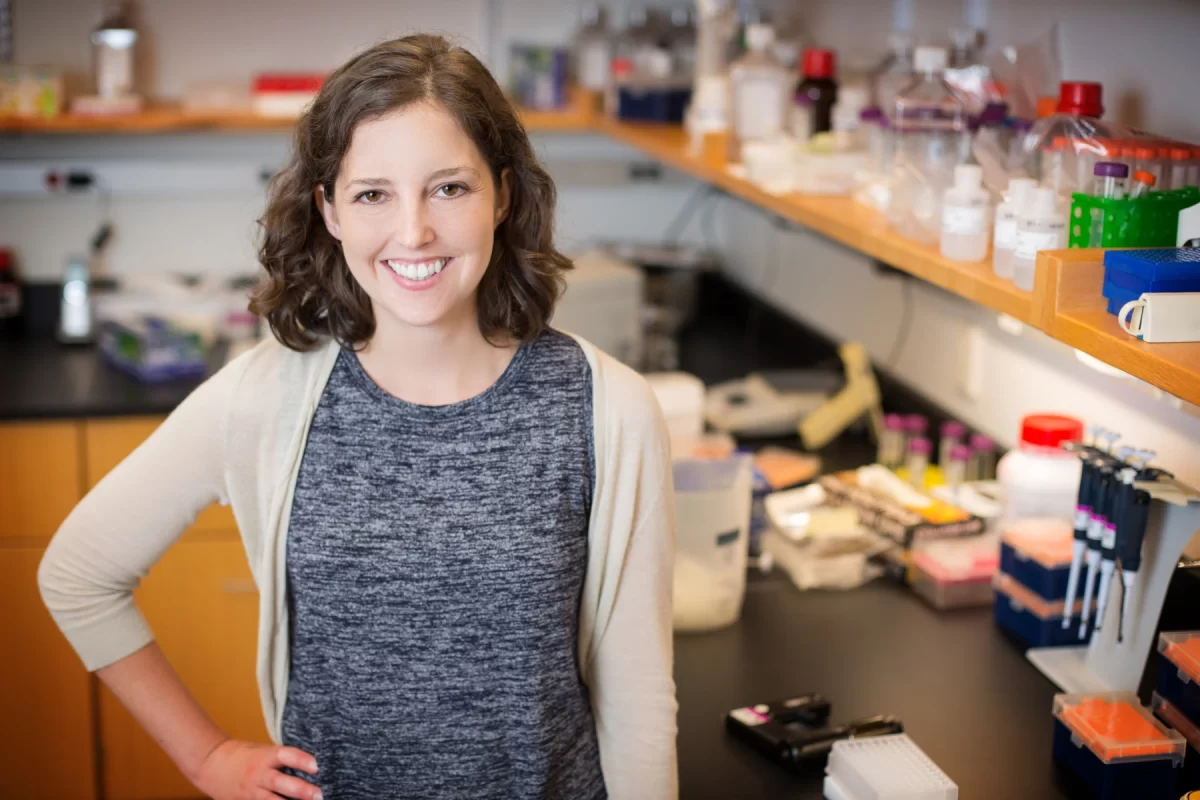
Molly Schumer

Hybridization between species is a common process in the evolutionary history of many species, including our own. Despite this, the evolutionary consequences of hybridization are still relatively poorly understood. We focus on using genomic, computational and experimental approaches to understand how hybridization shapes the evolution of genomes and species. Current projects in the lab include developing new approaches to detect selection after hybridization, time-transect monitoring of hybrid genome evolution, and understanding the genetic architecture of hybrid incompatibilities.

https://schumerlab.com/

Manish Saggar

We are a computational neuropsychiatry lab, dedicated to developing methods for a better understanding of individual differences in brain functioning in healthy and psychiatric populations. We primarily work with noninvasive human neuroimaging data (fMRI, EEG, and fNIRS). We are currently working in these three areas – [a] Modeling spatiotemporal dynamics in brain activity to develop person- and disorder-centric biomarkers; [b] Understanding the role of brain dynamics for optimized learning and performance (e.g., creativity) in individual and team settings; and [c] Developing methods that use network science, machine learning, and signal processing for better understanding of brain dynamics.

Mirabela Rusu

Research focuses on developing analytic methods for biomedical data integration, with a particular interest in the spatial integration of radiology and pathology images. Such integrative methods may be applied to create comprehensive multi-scale representations of biomedical processes and pathological conditions, thus enabling their in-depth characterization. The radiology-pathology fusion allows the creation of rich spatial labels that can be used as input for advanced machine learning to predict the presence and aggressiveness of cancers.