“Medicine is in the dawn of a fundamental shift from using artificial intelligence (AI) as tools to deploying AI as agents. When used as a tool, AI is passive and reactive. Even powerful medical AI foundation models today remain tools that depend on human users to provide input and context, interpret their output, and take follow-up steps. To fully unlock AI’s potential in medicine, clinicians need to make the key conceptual shift from using AI as sophisticated calculators to embracing AI as health-care teammates.”
Read more here: https://www.thelancet.com/journals/lancet/article/PIIS0140-6736(25)00202-8/abstract
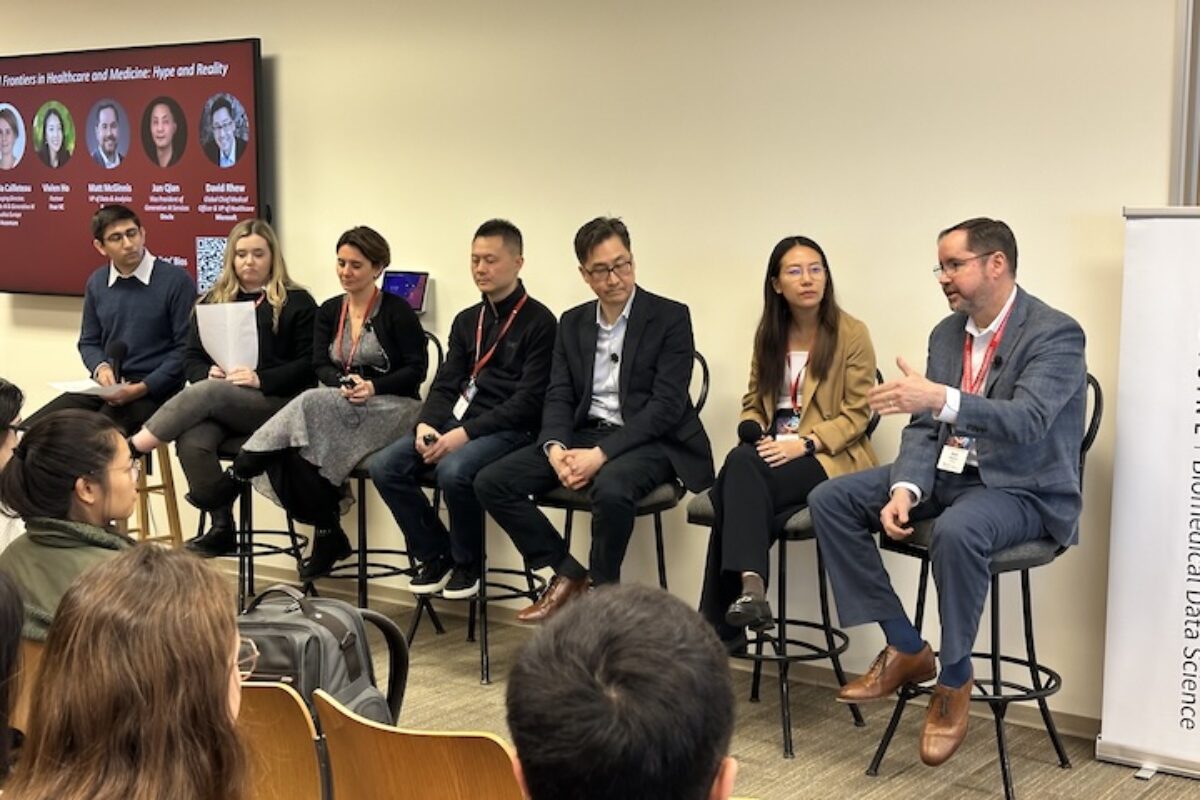
“This is a new era for us,” Chair of the Department of Biomedical Data Science Sylvia Plevritis began, opening the third annual Collaboration & Careers Forum on January 16, 2025. The event, which connected leaders from various sectors with DBDS faculty, students, and researchers to discuss technological advancements in precision healthcare, focused heavily on new developments in AI. It explored how those advancements could be applied to improve efficiencies and health outcomes.
Read the story here: https://dbds.stanford.edu/collaboration-and-careers-2025-overview/https://dbds.stanford.edu/collaboration-and-careers-2025-overview/
|
|
|
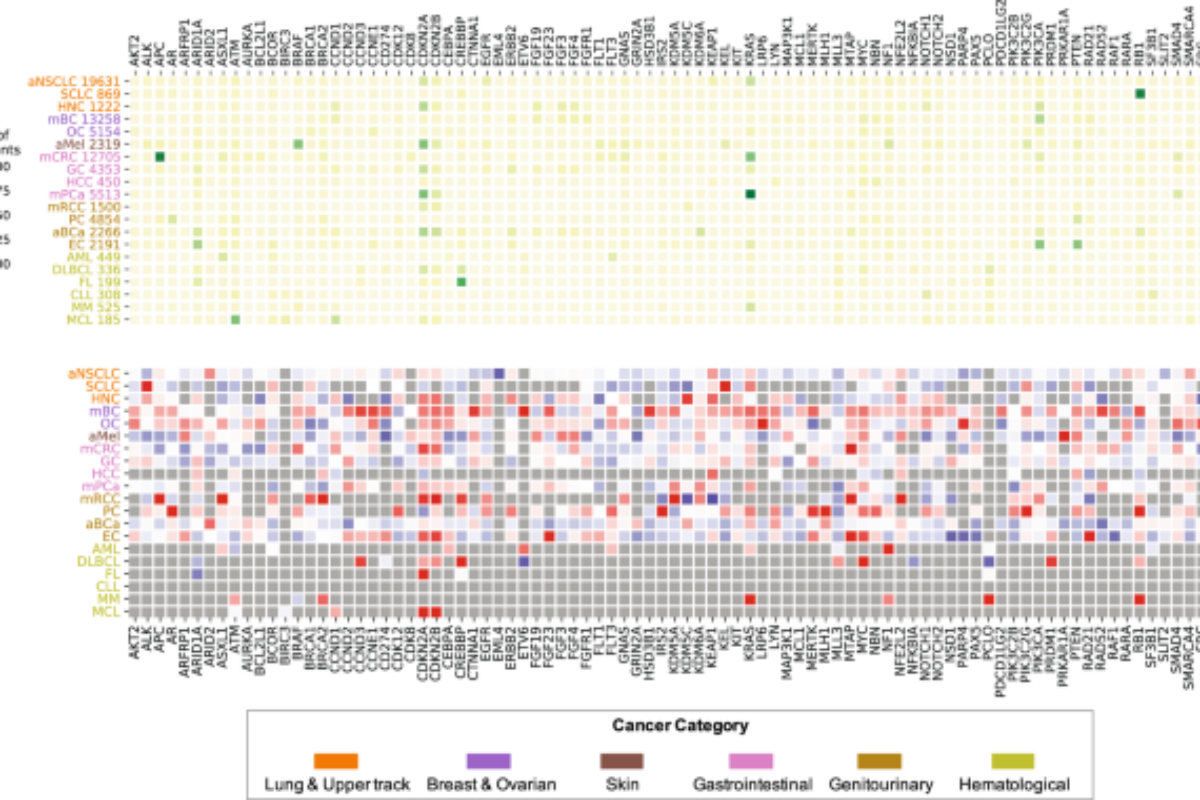
The Zou Group is excited to announce that a new precision oncology paper published in Nature Communications https://www.nature.com/articles/s41467-024-55251-5. The team leveraged genomics and EHR data of over 78K cancer patients to identify biomarkers that predict cancer treatment response.
Congratulations, team!