The Department of Biomedical Data Science’s External Engagement Program supports connections between outside organizations and our faculty, graduate students, and postdoctoral researchers.
We welcome companies, nonprofits, and government entities to join our growing eco-system focused on collaboration to advance precision health by leveraging complex real-world data through development of novel analytical methodologies.
There are many ways to engage with DBDS, as outlined below, including sponsored research, student fellowships, membership in our affiliate programs, talent recruitment, and more.
Affiliate Program Partners


Strategic Collaborators


Education Affiliate Program
Annual membership: $40,000
Benefits: Thought-leadership, research insights, connections with students/faculty for recruiting and potential research partners
Include annually:
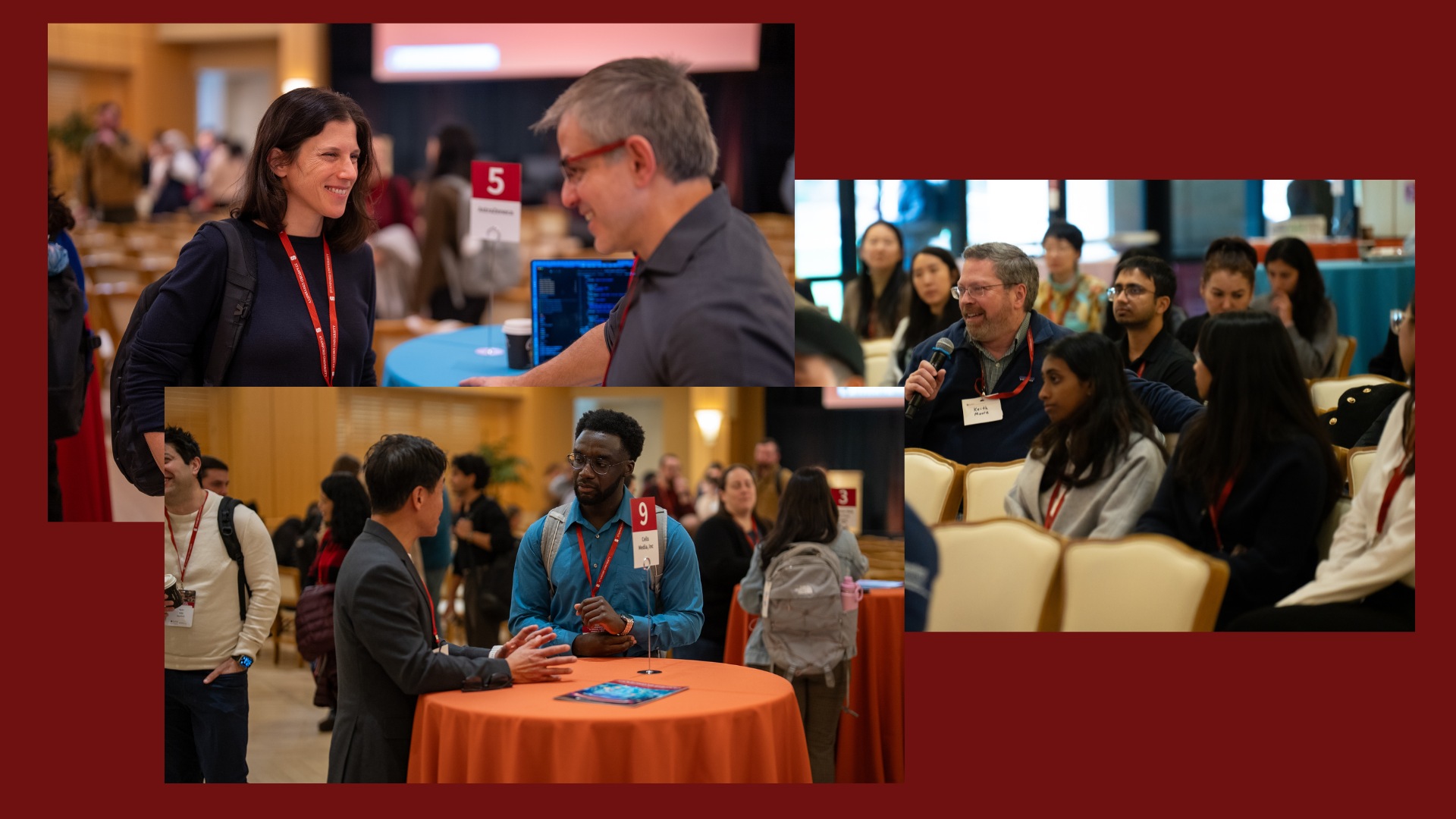
- Networking and Recruiting Forum with DBDS faculty, students, postdocs
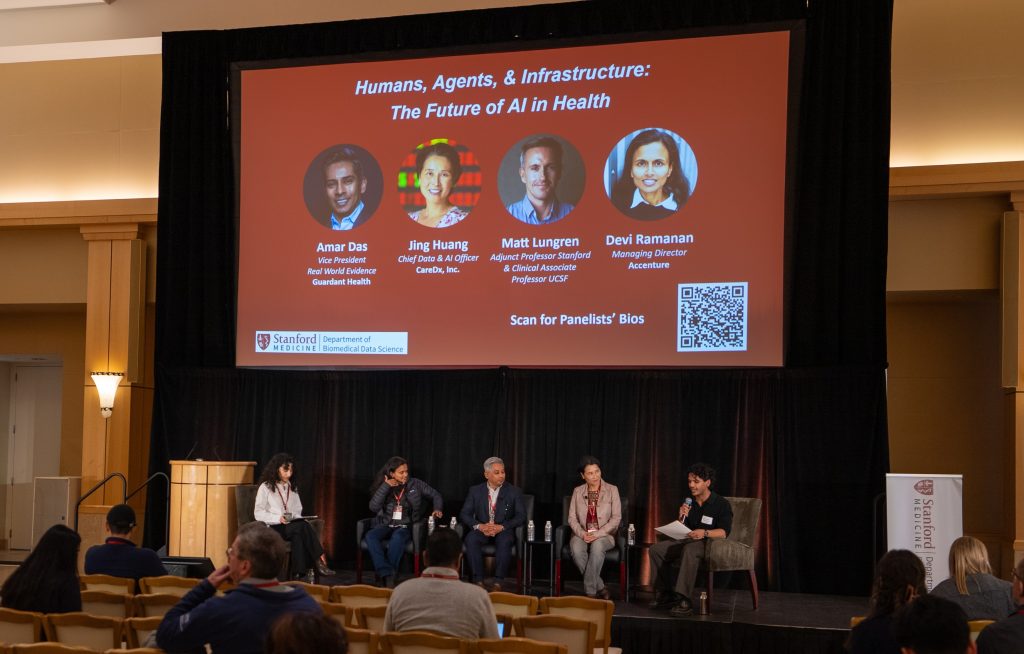
- Symposium on broad research areas with student posters, faculty talks, panels
- Potential Speaking Opportunities in classes and/or workshops; connect with students informally
- Faculty Liaison to connect with 60+ affiliated DBDS faculty
- PDF resume book with more than 100 DBDS graduate students
Funding supports curriculum development, programs connecting external partners, faculty and students, and student travel to technical conferences.
Center of Excellence Affiliate Program*
Annual Membership: $275K/year membership in a specific center
Center I: Precision Health & Pharmacogenomics (PGx)
Mission: To develop a nationally recognized center for pharmacogenomics research and best practices in the implementation of clinical pharmacogenomics. The center will include development of tools to leverage the knowledge in the NIH-sponsored PharmGKB (The Pharmacogenomics Knowledgebase; www.pharmgkb.org), create translational tools for clinical report generation, and a mobile application on pharmacogenomics knowledge to be used by both providers and patients.
Center II: Multimodal Data Integration
Mission: To transform the way we address acute and life-threatening diseases and chronic health conditions through analysis of new and existing data sources using state-of-the art AI/ML technologies combined with multimodal biomedical data integration. To build an open data and research collaboration that supports research in these areas and has world-wide appeal.
Center III: Computational Biology and AI
Mission: To bring together thought-leaders and innovators at Stanford together to work at the intersection of computational Biology and AI through interdisciplinary collaborations. Projects will include developing AI-driven computational methods to advance our understanding of the molecular basis of health and disease and produce advances in molecularly-based approaches to risk assessment, early detection, diagnosis, and therapeutics. Other projects will be defined over time with input from internal and external collaborators.
Center of Excellence Benefits and Touchpoints:
- All of the Education Affiliate Program benefits, plus:
- Facilitated engagement with research
- DBDS External Advisory Council
- Regular updates on the progress of research and translational work conducted by faculty
- Invitations to attend and possibly speak in relevant seminars, workshops, and classes (The site presentations and all information, data and results arising from such visitation interactions will be shared with all members and the public.)
- Opportunities for visiting scholars
Other Affiliate Program Information
The External Engagement Program will use and develop open-source software, and it is the intention of External Engagement Program that any software will be released under an open source model.
All memberships are subject to Stanford University Policies for Industry Affiliates Programs. Please see the Stanford Research Policy Handbook for details. Information on the Stanford University visiting scholar program can be found here.
* For Centers of Excellence, companies may provide additional funding and all research results arising from the use of the additional funding will be shared with all program members and the general public. A program member may request the additional funding be used to support a particular area of program research identified on the program’s website, or the program research of a named faculty member, as long as the faculty is identified on the program website as participating in the program. In either instance, the director of the Affiliate Program will determine how the additional funding will be used in the program’s research.

For opportunities to collaborate around sponsored research or gifts to support student fellowships, initiatives, and other department programs, please contact Karen Matthys for more information.