
The Industry Mentoring Program
Developed by the Department of Biomedical Data Science, the Industry Mentoring Program builds the connection between faculty, students, postdocs, and our partners currently working in the field. Both adjunct and alumni faculty have deep experience and active roles in industry, providing a wealth of information now available to members of DBDS to discuss ideas, strategies, and possibilities outside of academia.
The mentoring team, comprised of adjunct faculty/industry leaders, offers guidance for faculty and students founding start-ups, advice for those considering investing as a career, and what corporate roles may be a good career path for students.
The Industry Mentoring Program will hold regular online office hours in which any member of DBDS can discuss industry career options, introductions to particular organizations, discover other industry networking opportunities, and use this time to build relationships with mentors and gain insights from their industry experiences.
Make an online appointment with an Industry Mentor here.
Industry Mentor Bios
Mohit Kaushal
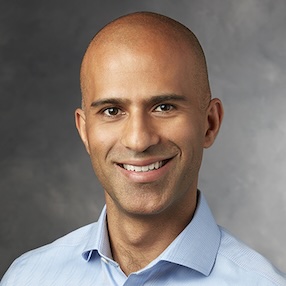 Mohit Kaushal has had an extensive career within investing, clinical medicine/academia and public policy. Mohit is a lead investor/board member to numerous transformational companies including Oak Street Health (NYSE:OSH) (acquired by CVS Health, NYSE:CVS), Humedica (acquired by Optum Health), Rxante (acquired by Millennium), Change Healthcare (acquired by Emdeon), Universal American (NYSE:UAM) (acquired by WellCare, NYSE:WCG), CitiusTech (acquired by Baring), Gravie, Wellframe (acquired by HealthEdge), Elation Health, The Oncology Institute (NASDAQ:TOI), Galatea Bio and others.
During his time in the Obama administration, he was a member of the White House Health IT task force; a cross agency team implementing the technology aspects of Health Reform. He also built and led the first dedicated health care team at the Federal Communications Commission. Dr. Kaushal continues to be active within public policy and is a scholar in residence at the newly created Duke Margolis Center for Health Policy. He was previously a visiting scholar at the Brookings Institution. He has also been appointed to the FDASIA Workgroup of the Health IT Policy Committee and to the National Committee on Vital and Health Statistics, advising HHS on Data Access and Use. Kaushal is an ER physician, holds an MBA from Stanford and an MD with distinction from Imperial College of Science, Technology and Medicine, London
Tanveer Syeda-Mahmood
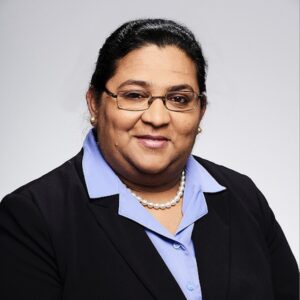 Tanveer Syeda-Mahmood is an IBM Fellow and a Global Imaging AI leader in IBM Research. As a worldwide expert in imaging, she is leading the company’s future in Multimodal Bioinspired AI and defining new features in WatsonX series of products. Until recently, she was the Chief Scientist of the Medical Sieve Radiology Grand Challenge that helped launch the field of Radiology AI and the IBM Watson Health Imaging business. She served in the role of CTO to help establish that line of business and defining many of its products. As an IBM Fellow, she is also involved in long-term strategic thinking on the evolution of the field of AI. She mentors several students at various universities, particularly, the under-served. Currently, Dr. Syeda-Mahmood is an adjunct professor in the department of Biomedical Data Science at Stanford.
Dr. Syeda-Mahmood received her Ph.D. from the MIT Artificial Intelligence Lab in 1993. Prior to joining IBM, she led the image indexing program at Xerox Research as one of the early originators of the field of content-based image and video retrieval. Over the past 30 years, her research interests varied from areas relating to artificial intelligence ranging from computer vision, image and video databases to recent applications in medical image analysis, healthcare informatics and clinical decision support. She has over 300 refereed publications and over 170 filed patents. Dr. Syeda-Mahmood has chaired many international conferences, including IEEE CVPR (2008), IEEE HISB (2011), IEEE ISBI (2021), MICCAI (2023). She is a Fellow of IEEE,AIMBE (American Institute for Medical and Biological Engineering) and AAIA (Asian Association of Artificial Intelligence) and MICCAI (Medical Imaging and Computer-Assisted Intervention) societies.
Karen Matthys
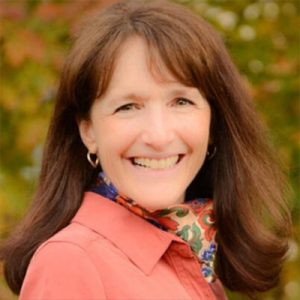
Karen Matthys is the Executive Director of the Department of Biomedical Data Science (DBDS). She leads department strategic initiatives including development of the external partners eco-system, and oversees DBDS graduate program operations. She currently works with over 40 external organizations in healthcare and technology to establish collaborations regarding research, recruiting and curriculum. Previously, Karen was an Executive Director in the Stanford School of Engineering Institute for Computational & Mathematical Engineering (ICME). She co-founded and served as Co-Director of the Women in Data Science (WiDS) global initiative which now reaches over 100,000 participants annually.
Karen has extensive experience in business strategy and marketing with high-tech companies from start-ups to Fortune 500s. She held senior management roles at Apple Computer, and at Cellular One, an ATT company. She was also a Principal at Indigo Partners consulting firm and an Innovation Fellow at SRI International. Karen was a lecturer and instructor at Stanford for courses such as Critical and Analytical Thinking (Graduate School of Business), and AI for Good (School of Engineering). She holds an MBA from Stanford University and a BS in Systems Engineering with highest distinction from the University of Virginia.
Francisco de la Vega
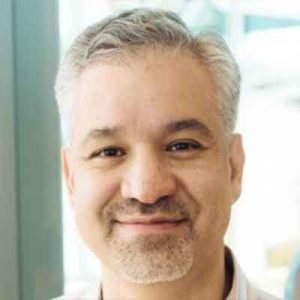
Francisco De La Vega is the Chief Technology Officer and SVP of Platform R&D at Galatea Bio. He is a distinguished human geneticist and computational biologist, recognized for his expertise in clinical and population genomics and bioinformatics. He is also an experienced technical executive, having spent over a decade at Applied Biosystems/Life Technologies, developing several successful genetic analysis products, and afterward contributing to life sciences start-up companies focused on bringing genome sequencing into the clinic. More recently, Francisco was the Vice President of Hereditary Disease at Tempus AI, where he developed whole-genome diagnostic tests and conducted research on the links between genetic ancestry and cancer genome mutational profiles. Previously, he was the Chief Scientific Officer at Fabric Genomics, where he led the development of AI tools for diagnosing rare genetic diseases. He has held leadership roles in several breakthrough international projects such as the 1000 Genomes Project, the Genome-in-a-Bottle Consortium, and the International Cancer Genome Consortium. Francisco is an elected member of the board of directors of the International Society for Computational Biology and an Adjunct Professor in the Department of Biomedical Data Science at the Stanford University School of Medicine.
Matthew Lungren
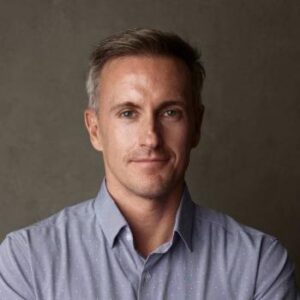 Matthew Lungren is Chief Scientific Officer for Microsoft Health & Life Sciences where he focuses on translating cutting edge technology, including generative AI and cloud services, into innovative healthcare applications. As a physician and clinical machine learning researcher, he maintains collaborative research and teaching roles as adjunct professor at Stanford University.
Prior to joining Microsoft, Dr Lungren was a clinical interventional radiologist and research faculty at Stanford University Medical School where he led the Stanford Center for Artificial Intelligence in Medicine and Imaging (AIMI). He later served as Principal for Clinical AI/ML at Amazon Web Services in World Wide Public Sector Healthcare, focusing on business development for clinical machine learning technologies in the public cloud.
His scientific work has led to more than 200 publications, including work on multi-modal data fusion models for healthcare applications, new computer vision and natural language processing approaches for healthcare specific domains, opportunistic screening with machine learning for public health applications, open medical data as public good, prospective clinical trials for clinical AI translation, and application of generative AI in healthcare. He has served as advisor for early stage startups and large fortune-500 companies on healthcare AI technology development and go-to-market strategy. Dr. Lungren’s work has been featured in national news outlets such as NPR, Vice News, Scientific American, and he regularly speaks at national and international scientific meetings on the topic of AI in healthcare.
Lungren is also a top rated instructor leading AI in Healthcare courses designed especially for learners with non-technical backgrounds:
Stanford/Coursera: https://www.coursera.org/learn/fundamental-machine-learning-healthcare
LinkedIn Learning: https://www.linkedin.com/learning/an-introduction-to-how-generative-ai-will-transform-healthcare